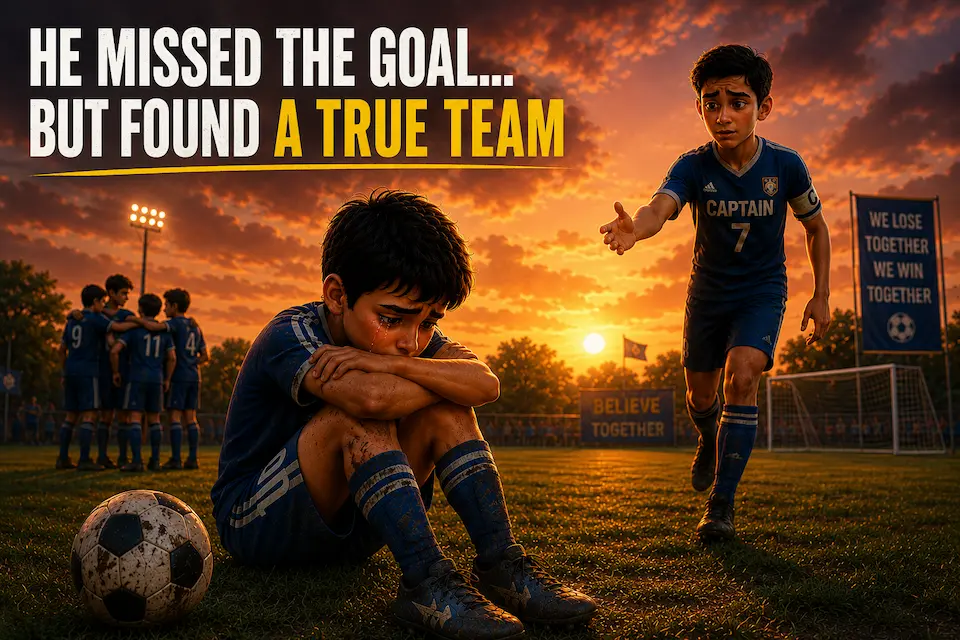
Kabir and Aditya studied at the same school. Both had recently started learning self-defense, but the lessons they received at home were completely different.
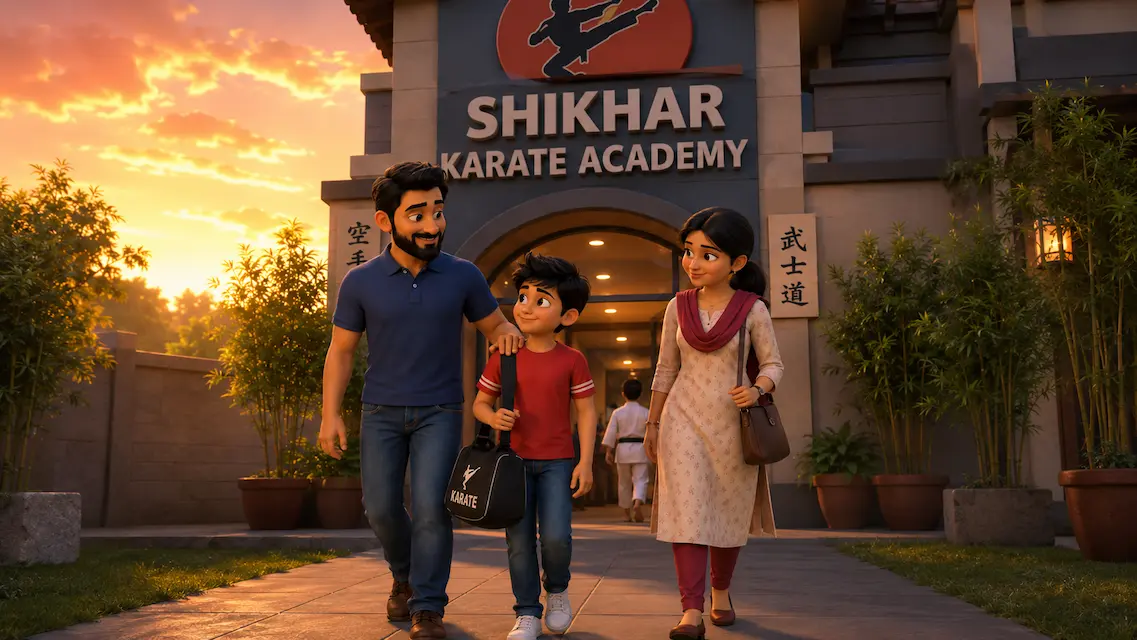
One evening, while walking to karate class, Kabir’s father said,
“Son, you’re learning self-defense so that no one thinks you’re weak. If anyone ever bothers you, make sure you teach them such a strong lesson that they never dare to do it again.”
His mother smiled and added,
“Never step back out of fear. Make sure people remember who they picked a fight with.”
Kabir took those words to heart.
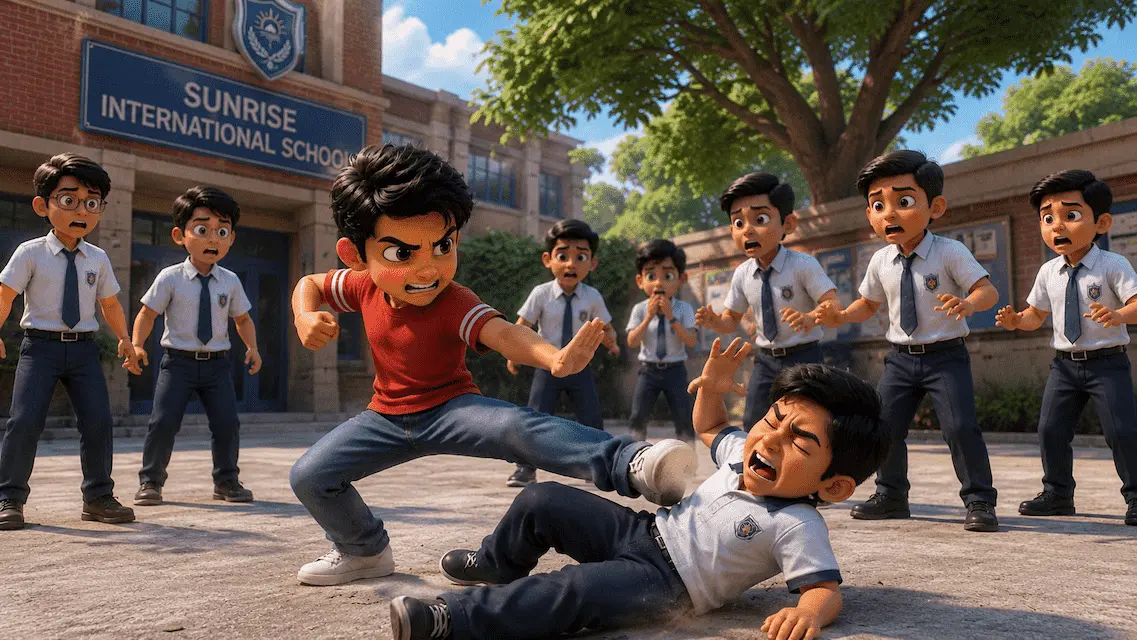
A few days later, he got into an argument with another student at school. In anger, he used all the techniques he had learned in self-defense class. The other boy was injured.
When Kabir returned home, he proudly told his parents what had happened.
His father patted him on the shoulder and said,
“Well done! Now no one will take you lightly.”
From that day on, Kabir believed that true strength meant defeating others.
At the same time, Aditya’s parents always reminded him of one important lesson.
“Son, self-defense is not about fighting. It’s about protecting yourself and others. If you can keep someone safe without hurting anyone, that’s the greatest victory.”
Aditya never forgot those words.
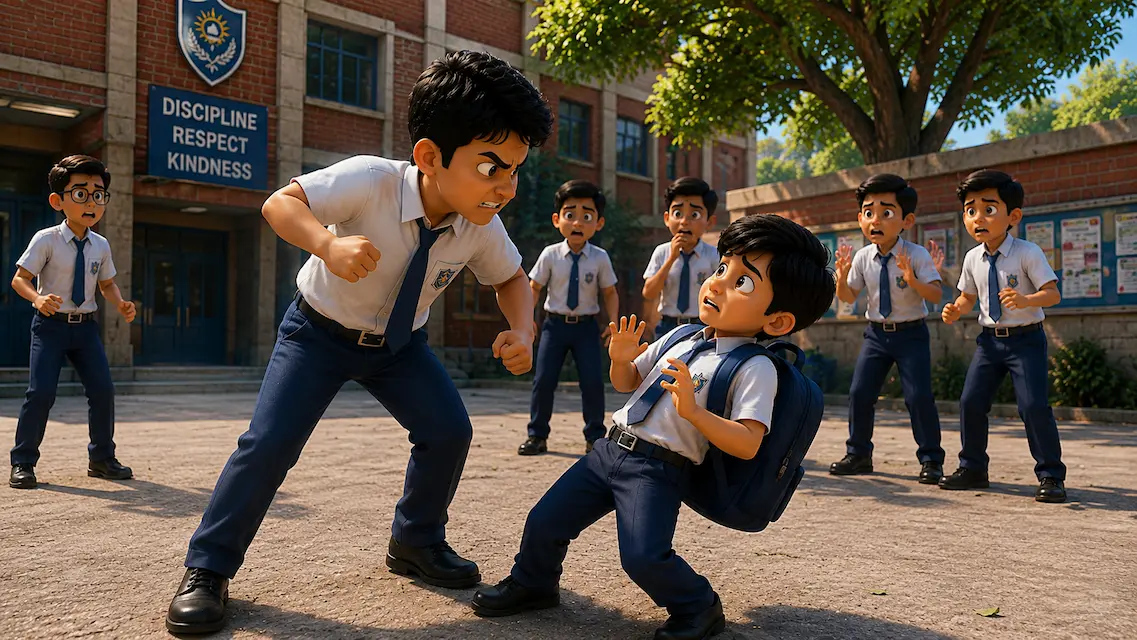
One day at school, Kabir became angry again and charged toward a younger child.
Aditya immediately stepped in.
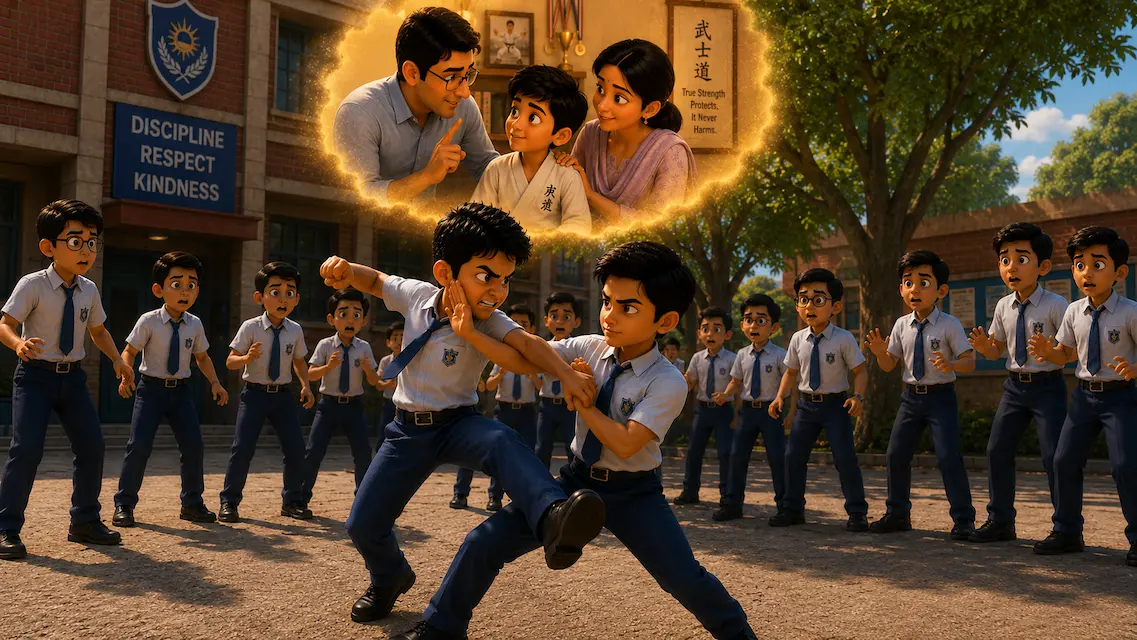
With calm confidence, he blocked Kabir’s attacks, controlled his movements, and guided the younger child safely out of danger.
Kabir kept trying to attack, but Aditya never struck back.
Within a few seconds, the situation was over.
Kabir was shocked. He couldn’t understand how Aditya had stayed so calm.
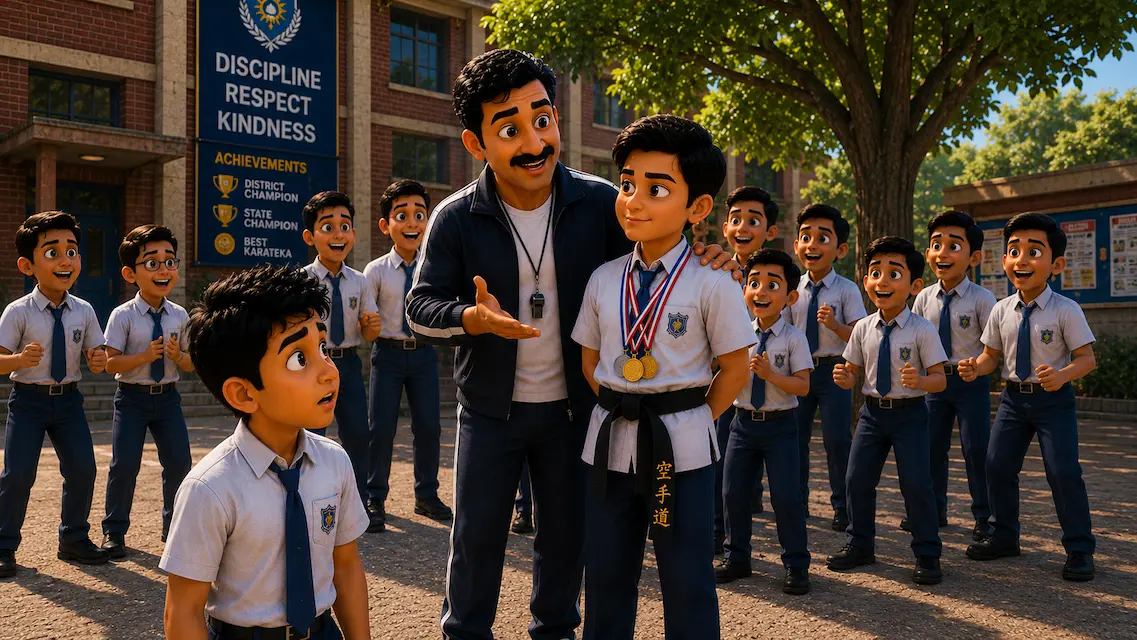
Just then, the sports teacher arrived.
Looking at the students, he asked,
“Do you all know who Aditya really is?”
The children remained silent.
The teacher smiled and said,
“Aditya is a Junior Black Belt at his karate academy. He has won several district and state-level medals. If he wanted to, he could have knocked Kabir down in just a few seconds.”
Then he turned toward Aditya and said,
“But instead of showing off his strength, he chose to use it responsibly. That is the true spirit of martial arts.”
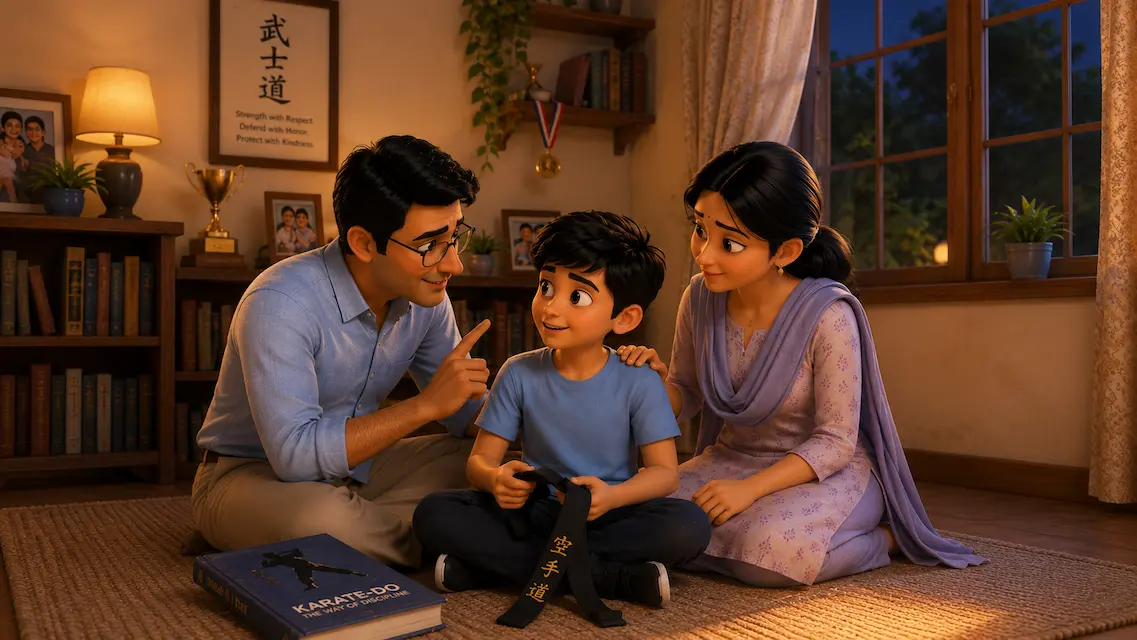
Aditya remembered his parents’ words:
“You never need to prove your strength. Using it for the right reason, at the right time, is the greatest victory.”
Kabir lowered his head.
For the first time, he realized that real strength is not about hurting others—it is about keeping people safe.
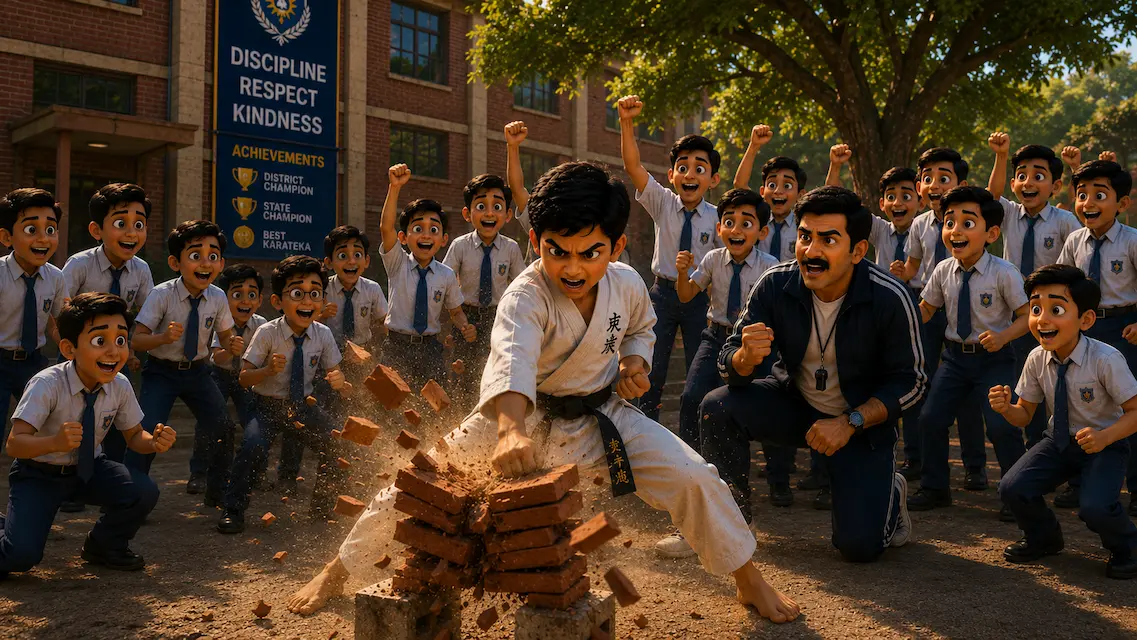
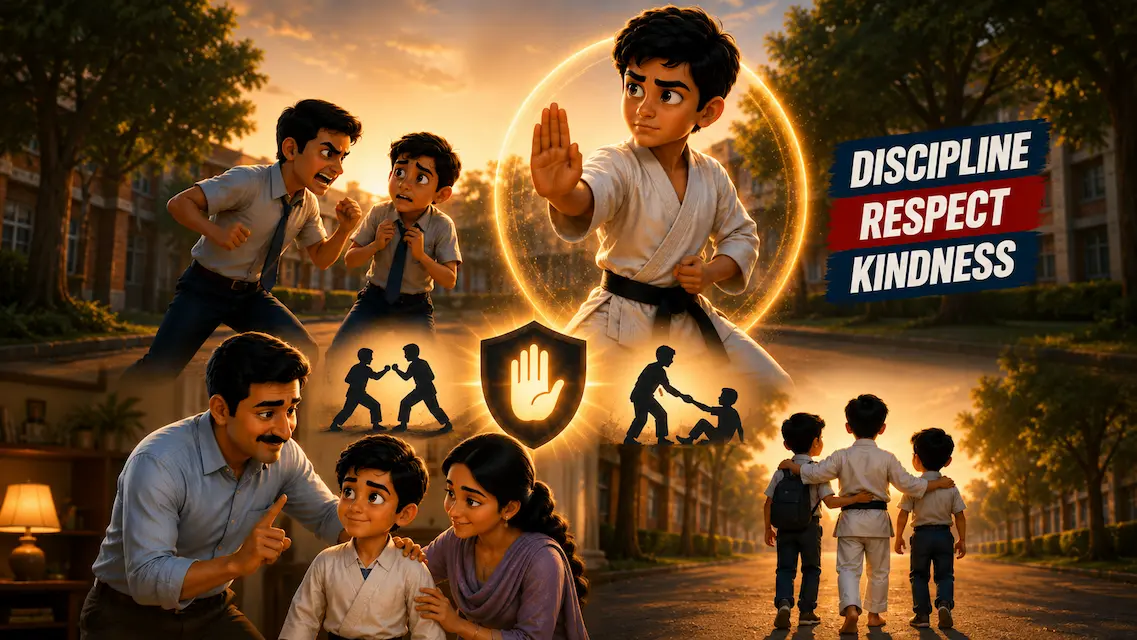
Teaching children self-defense is important, but teaching them why they are learning it is even more important.
The first rule of martial arts is not to win fights, but to prevent them whenever possible.
The values parents teach their children determine whether they use their strength to intimidate others—or to protect them.