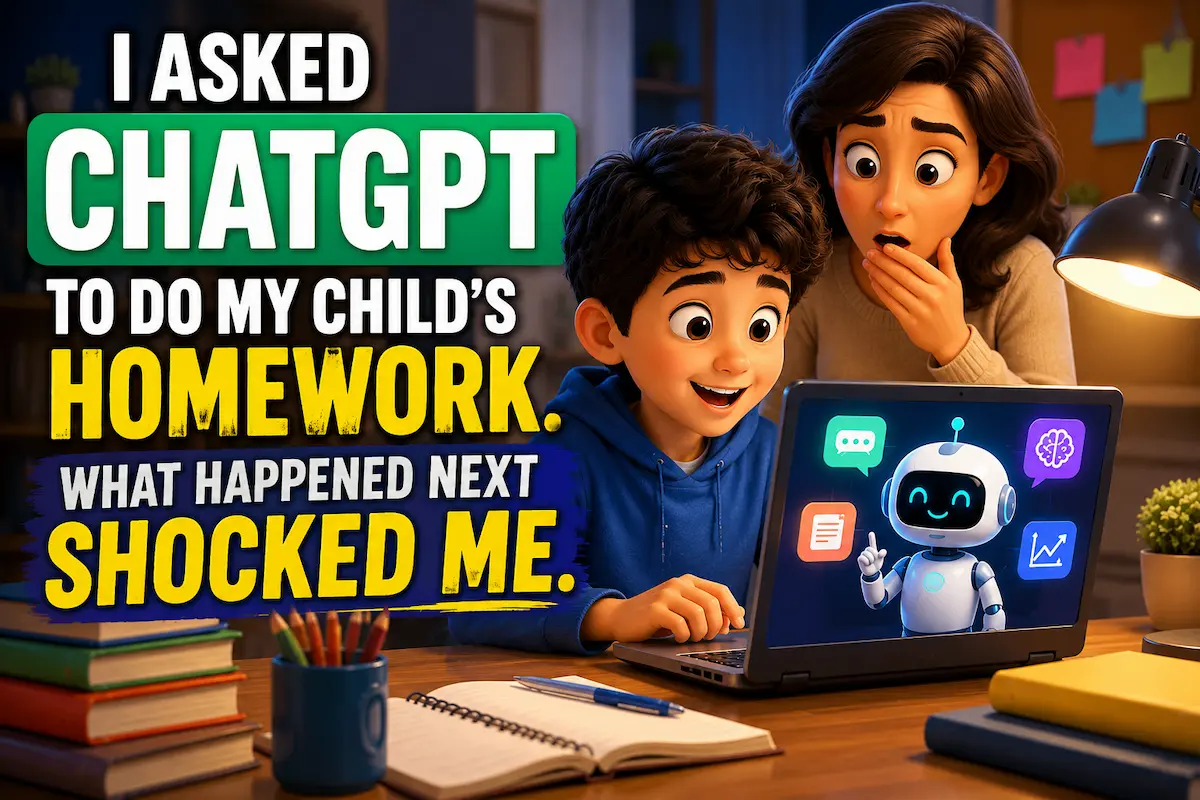
One evening, my child came home with a science assignment.
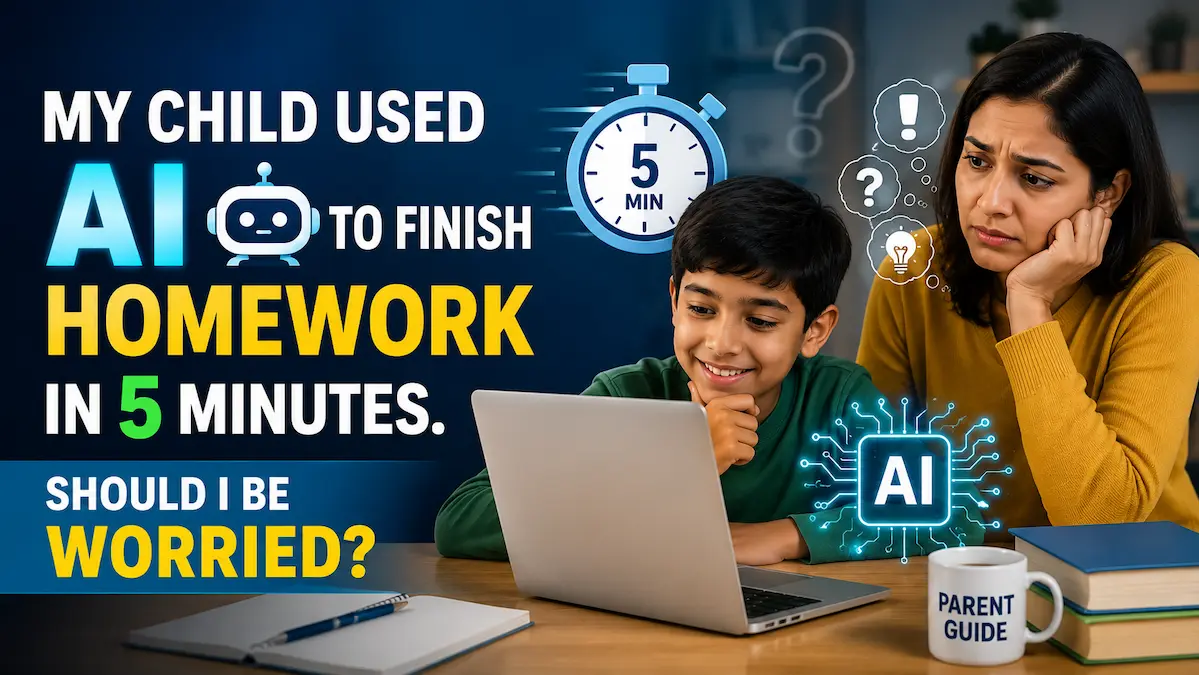
Before I could help, he opened his laptop and typed: “ChatGPT, please do my homework.”
Within seconds, the answer appeared.
No textbooks, No struggle, No thinking.
Just… an instant answer.
For a moment, I thought: “Wow, this technology is incredible.”
Then another thought hit me: “If AI does all the thinking, what exactly is my child learning?”
That question made me rethink everything.
The Homework Was Finished. But Was Learning Happening?
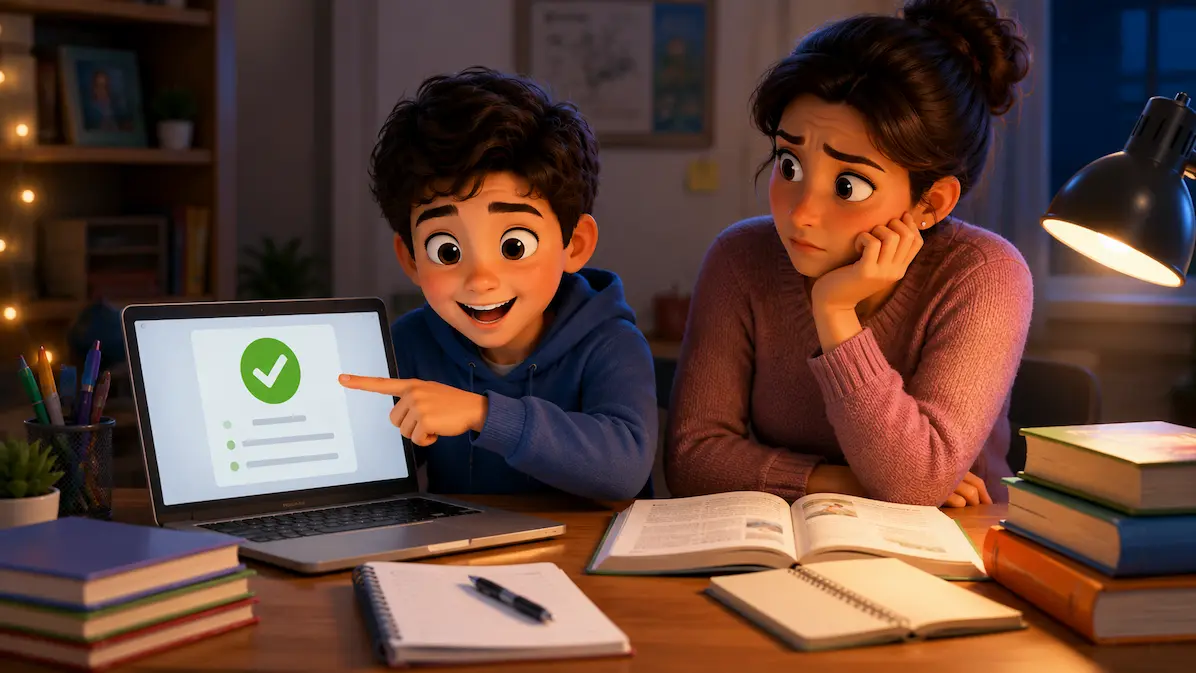
The assignment was complete in less than five minutes.
My child looked happy.
But when I asked: “Can you explain the answer?”
Silence.
He couldn’t.
That’s when I realized something important:
Finishing homework and learning are not the same thing.
The Real Risk Isn’t AI
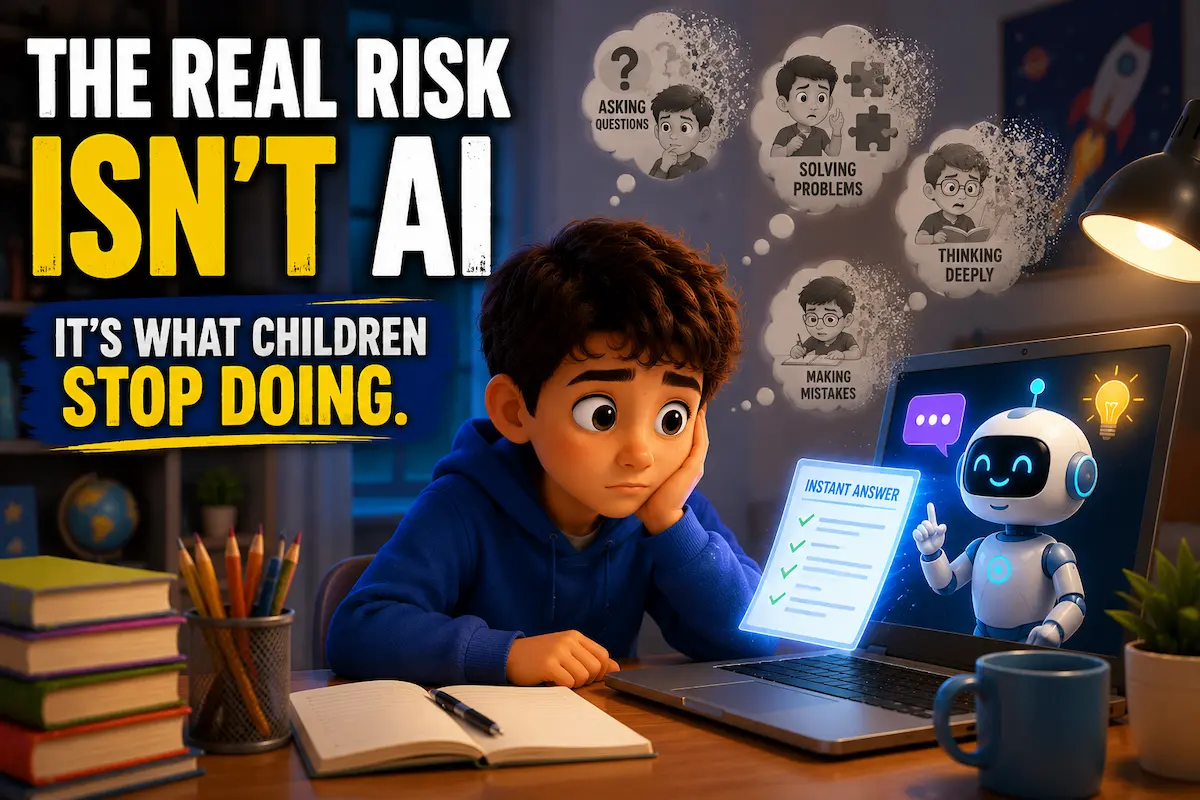
Many parents worry that AI itself is dangerous. The bigger danger is much simpler: Children may stop struggling.
And struggle is where learning happens.
Children learn when they:
✅ Make mistakes
✅ Ask questions
✅ Try again
✅ Get confused
✅ Discover answers themselves
These moments build: Confidence, Critical thinking, Creativity, Problem-solving skills, Resilience
If AI removes all of these experiences, children may finish faster but learn less.
Then We Tried Something Different
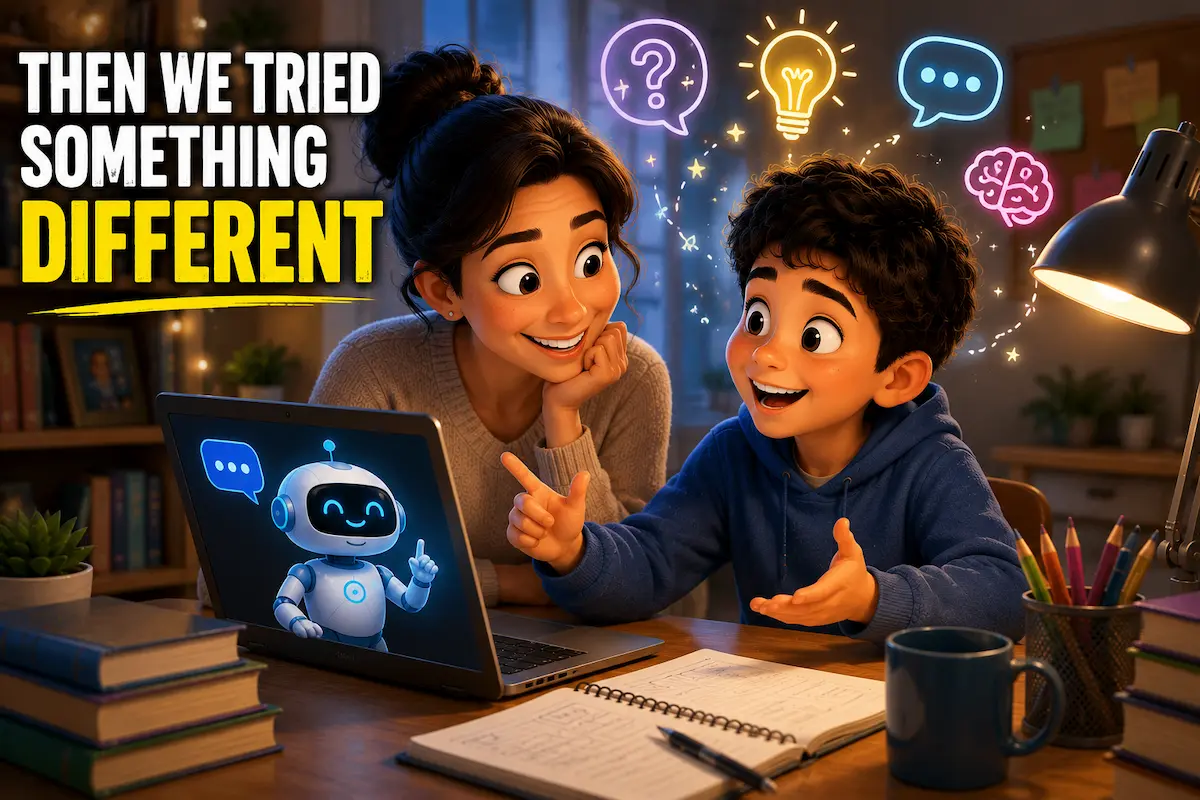
The next day, we changed one simple thing.
Instead of asking: ❌ “Do my homework.”
We asked: ✅ “Can you explain this topic in a way a 10-year-old can understand?”
The difference was amazing. My child started asking questions. He became curious. He wanted examples.
He even explained the concept back to me. AI had changed from a shortcut into a teacher.
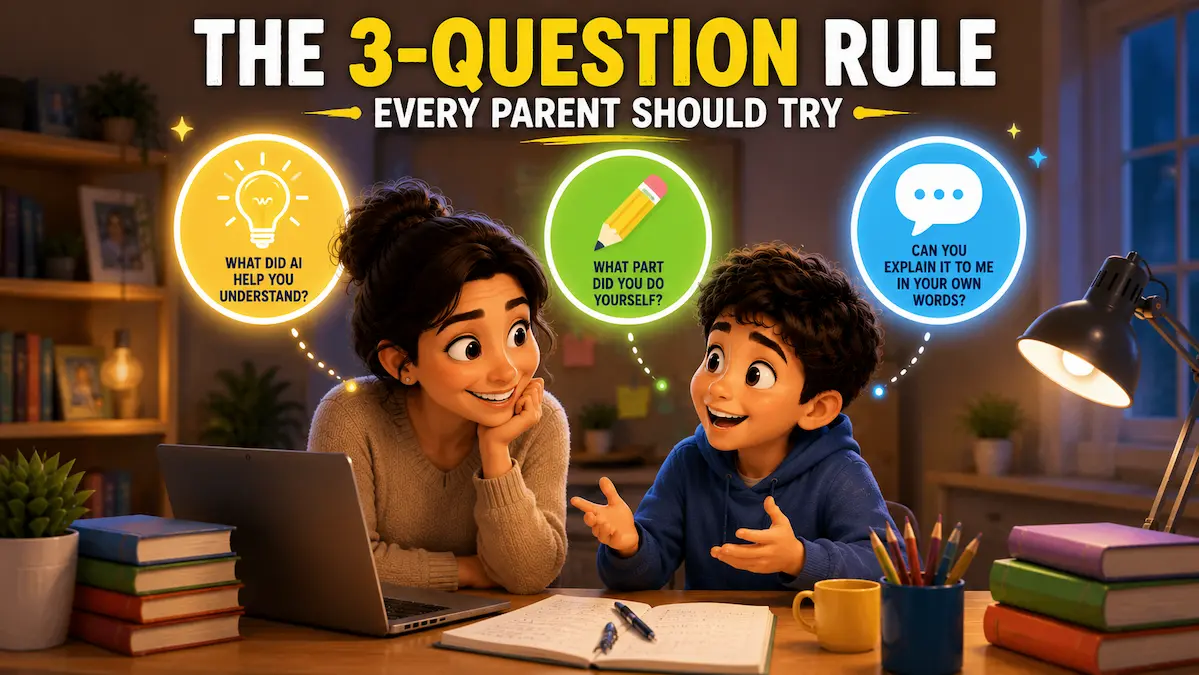
The 3-Question Rule Every Parent Should Try
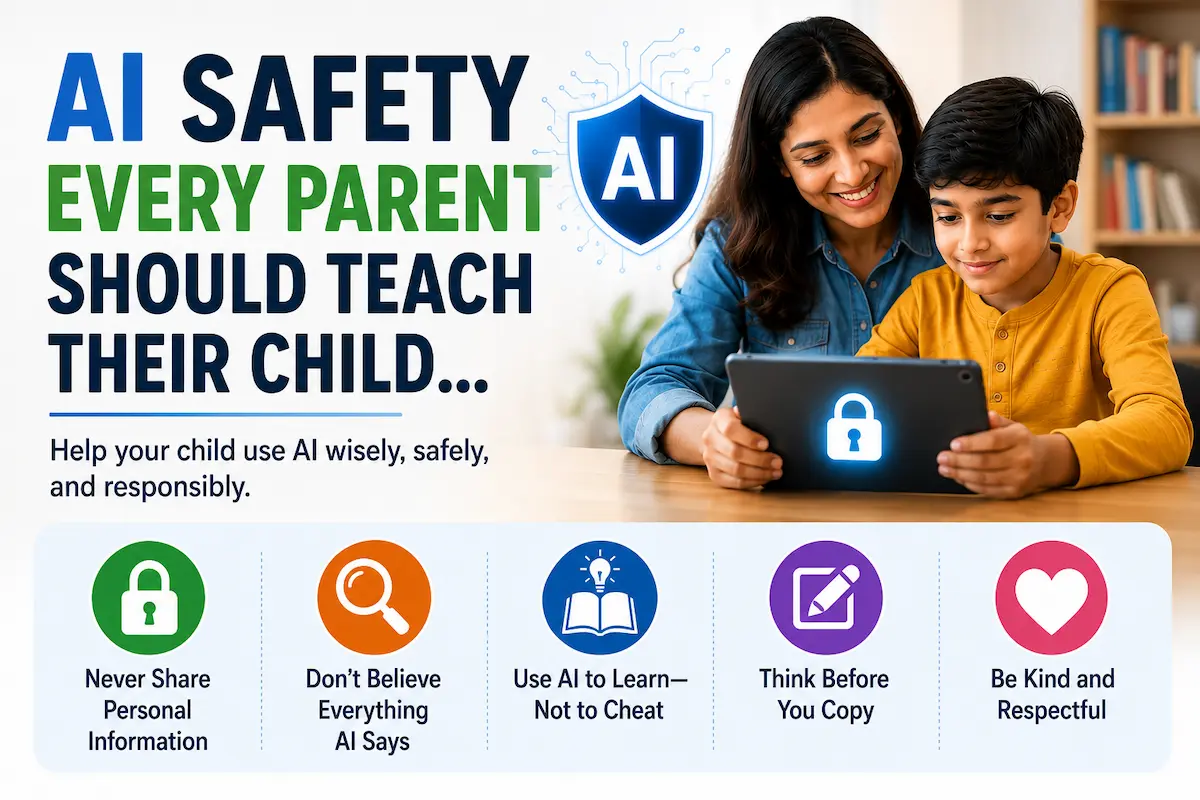
Whenever your child uses AI, ask:
1. What did AI help you understand?
2. What part did you do yourself?
3. Could you explain it to me in your own words?
If your child can answer these questions, learning is still happening.
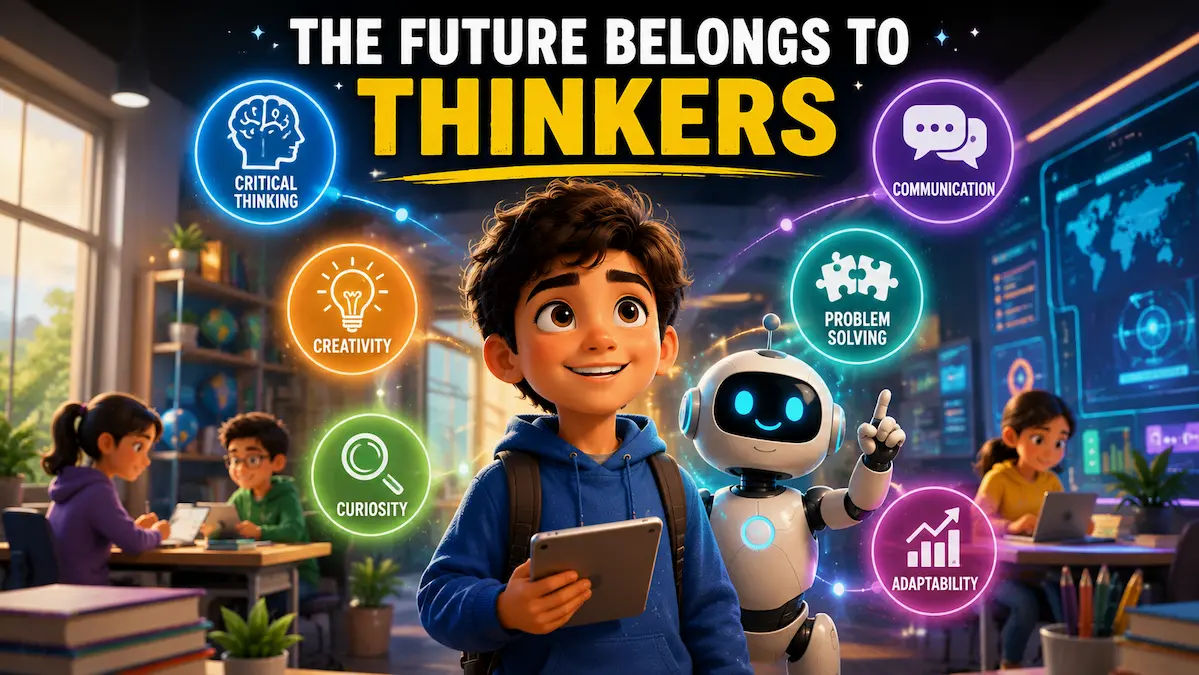
The Future Belongs to Thinkers
In the future, almost everyone may have access to AI. Answers will be everywhere.
But the children who succeed won’t necessarily be the ones who know the most answers.
They will be the ones who can:
- Ask great questions
- Think critically
- Evaluate information
- Solve new problems
- Use creativity and judgment
These are human skills. And they become even more valuable in an AI world.
The Lesson That Changed My Perspective
I no longer ask:
“Should children use AI?”
I ask:
“Are children using AI to think more—or think less?”
Because AI can either become:
❌ A shortcut that replaces learning.
or
✅ A tool that makes learning deeper and more exciting.
The choice depends on how we guide our children.
Takeaway for Parents
Don’t measure learning by how quickly homework gets finished. Measure it by how much your child understands afterward.
💬 If your child used AI to finish homework in five minutes, would you be worried—or excited? Why? Share your thoughts in the comments below!