Artificial Intelligence (AI) is no longer a futuristic concept. It is already part of our children’s daily lives—from educational apps and smart assistants to AI-powered homework tools. As parents, understanding AI is becoming just as important as understanding the internet was twenty years ago.
The good news is that AI can be a powerful learning partner when used wisely. The challenge is teaching children to use it responsibly.

What Is AI?
“AI is technology that can learn, answer questions, solve problems, and help people complete tasks.”
Examples children already know:
- Voice assistants
- Learning apps
- Language translation tools
- AI chatbots
- Smart recommendations on YouTube
Benefits of AI for Children
Personalized Learning: AI can adapt lessons to a child’s learning speed.
Homework Support: Children can get explanations when parents are busy.
Creativity Boost: AI can help generate story ideas, artwork concepts, and science project inspiration.
Accessibility: Children with learning challenges can receive additional support.


Potential Risks Parents Should Know
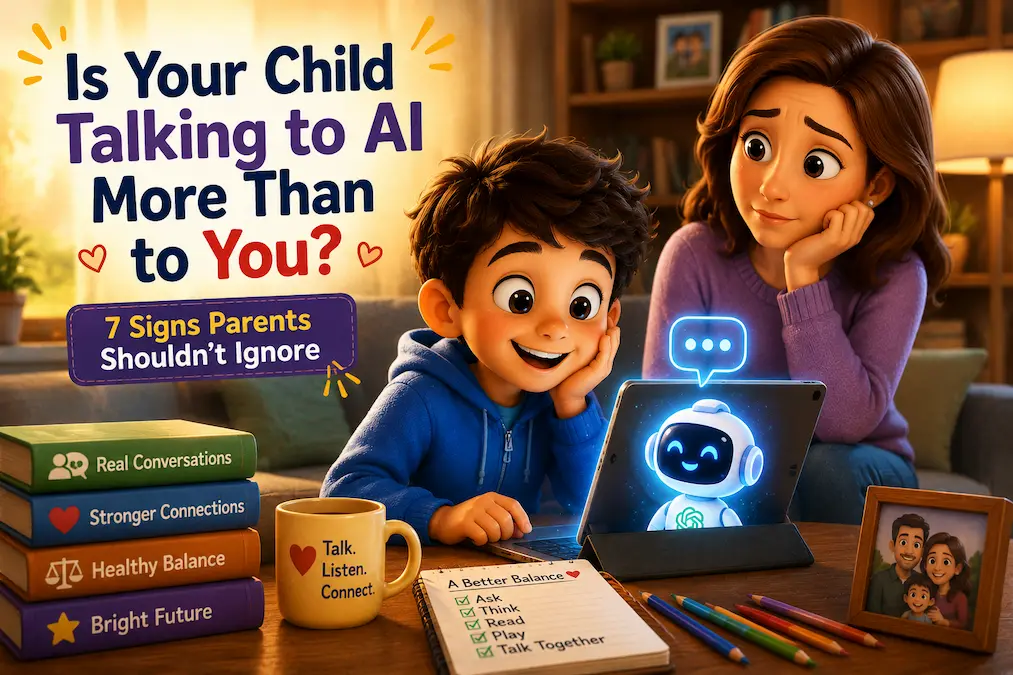
Overdependence: Children may stop thinking independently.
Incorrect Information: AI can sometimes make mistakes.
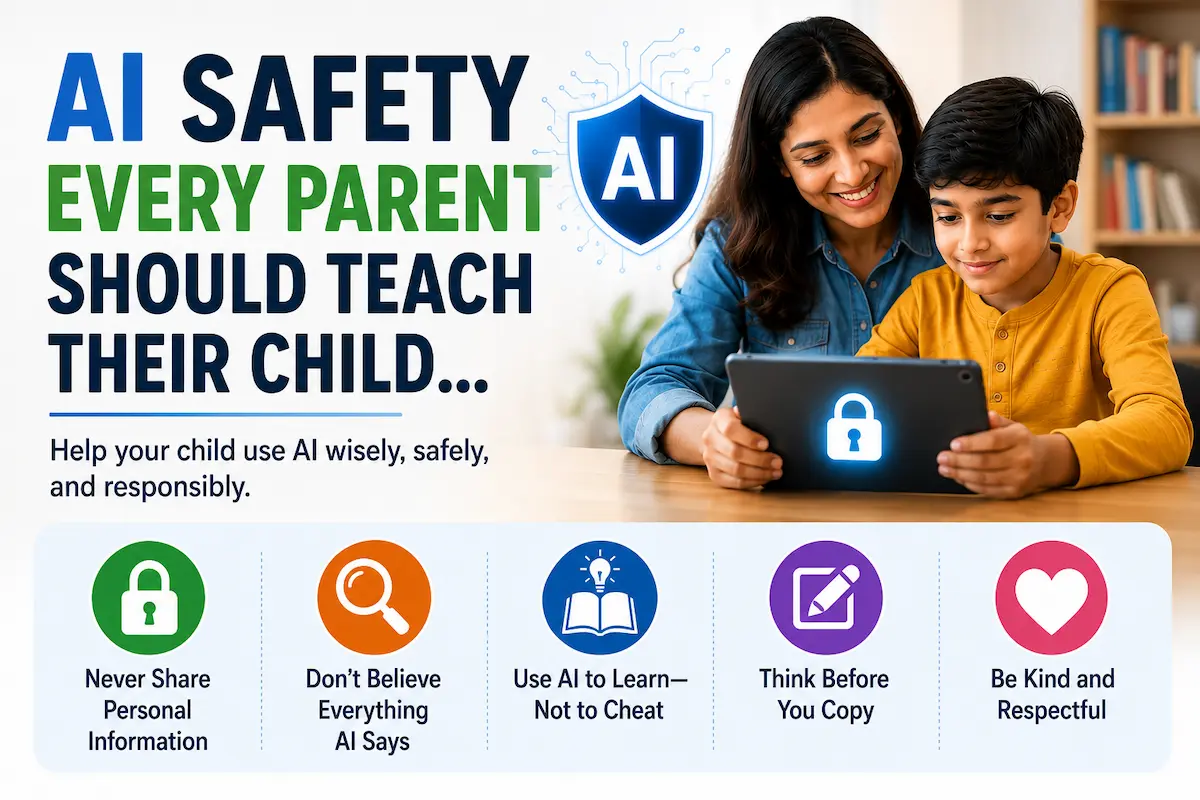
Privacy Concerns: Children should never share personal information.
Reduced Creativity: Using AI to do all the work prevents genuine learning.
7 Rules Every Parent Should Teach
Rule 1: AI Is a Helper, Not a Replacement for Thinking
Rule 2: Always Verify Information
Rule 3: Protect Personal Information
Rule 4: Use AI Together at First
Rule 5: Balance Screen Time
Rule 6: Encourage Questions
Rule 7: Prioritize Human Relationships


Preparing Children for the Future
Many future careers will involve working alongside AI.
The most valuable skills will be:
- Critical thinking
- Creativity
- Communication
- Emotional intelligence
- Problem-solving
These are skills AI cannot fully replace.
Final Thoughts
The goal is not to fear AI or completely embrace it without limits. The goal is to teach children how to use AI wisely, ethically, and responsibly.
Parents who learn alongside their children today will help prepare them for tomorrow’s opportunities.
Takeaway for Parents
“Teach your child to use AI as a tool for learning, not as a shortcut for thinking. The future belongs to children who can combine technology with creativity, curiosity, and good values.”