A Surprise That Many Parents Are Facing
Imagine this.
Your child comes home from school with a worksheet that usually takes 30 minutes to complete. You start preparing dinner, expecting to help later. Five minutes pass.
Your child proudly announces, “I’m done!”
You look at the worksheet. Every answer is correct. The handwriting is neat. The explanations are detailed.
Then your child casually says: “I asked AI to do it for me.”
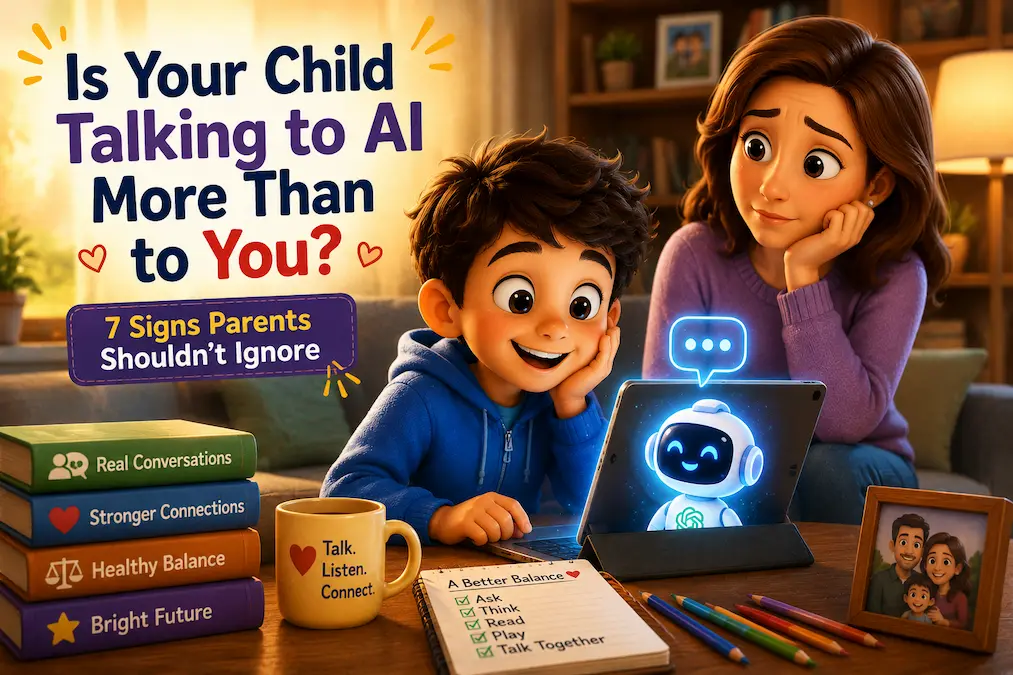
Many parents in 2026 are experiencing this exact moment. The question isn’t whether children will use AI. They already are.
The real question is: How can parents help children use AI without letting it do all the thinking?
The Calculator Lesson
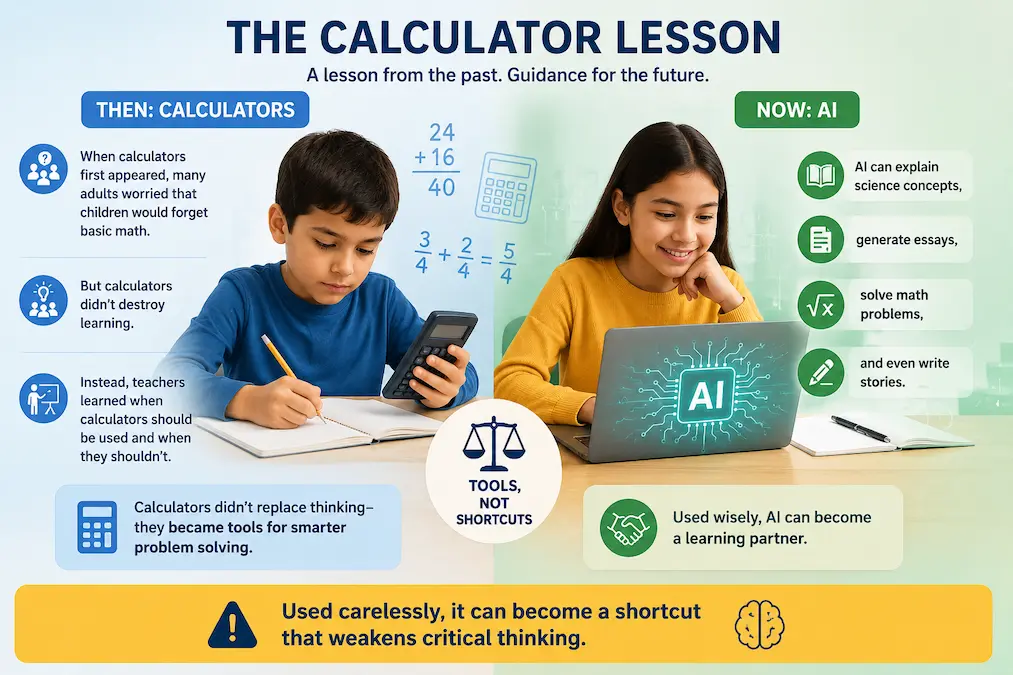
When calculators first appeared, many adults worried that children would forget basic math. But calculators didn’t destroy learning. Instead, teachers learned when calculators should be used and when they shouldn’t.
AI is similar—but much more powerful. It can explain science concepts, generate essays, solve math problems, and even write stories.
Used wisely, AI can become a learning partner. Used carelessly, it can become a shortcut that weakens critical thinking.
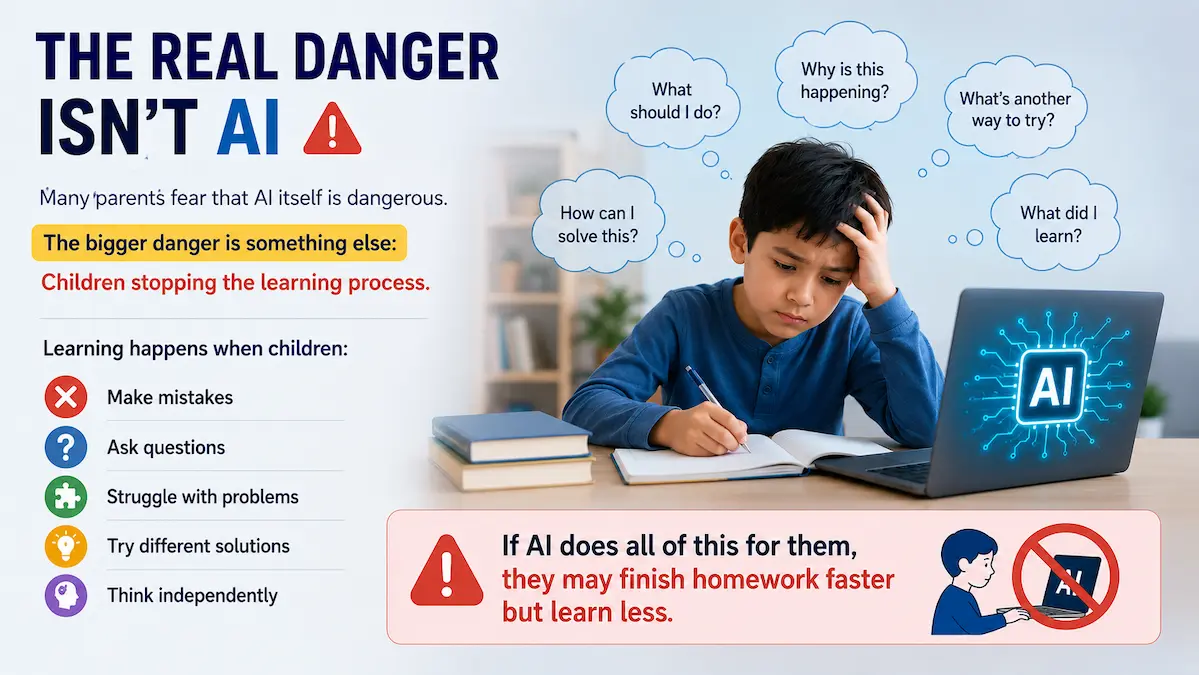
The Real Danger Isn’t AI
Many parents fear that AI itself is dangerous.
The bigger danger is something else: Children stopping the learning process.
Learning happens when children:
- Make mistakes
- Ask questions
- Struggle with problems
- Try different solutions
- Think independently
If AI does all of this for them, they may finish homework faster but learn less.
A Better Way to Use AI
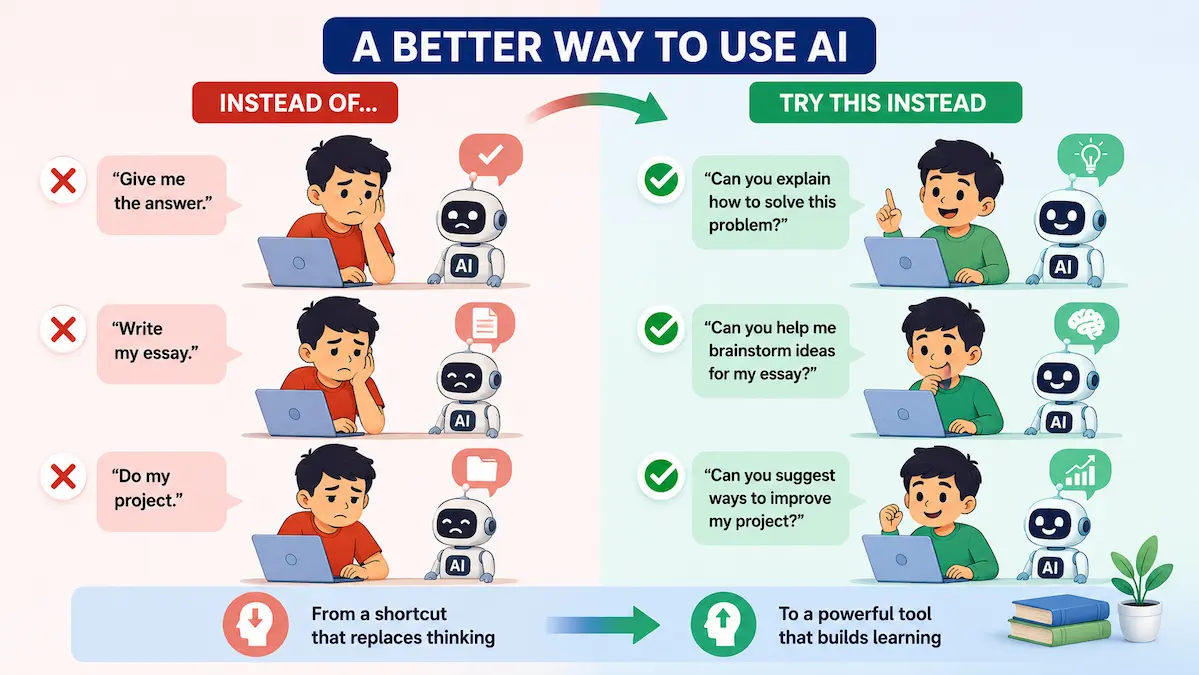
Instead of asking AI: ❌ “Give me the answer.”
Teach children to ask: ✅ “Can you explain how to solve this problem?”
❌ “Write my essay.” ✅ “Can you help me brainstorm ideas for my essay?”
❌ “Do my project.” ✅ “Can you suggest ways to improve my project?”
This simple shift transforms AI from a replacement for thinking into a tool for learning.
Skills That Matter More Than Ever
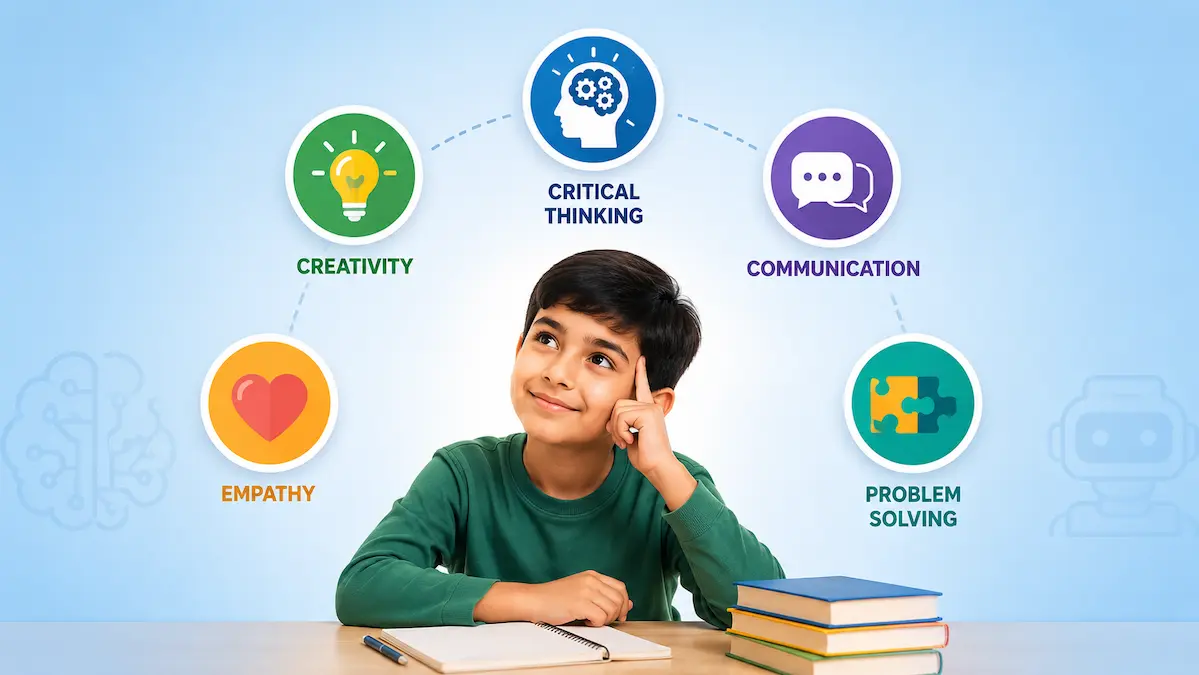
As AI becomes smarter, some skills become even more valuable:
Creativity: Coming up with original ideas.
Critical Thinking: Evaluating whether information is true or false.
Communication: Expressing thoughts clearly and respectfully.
Empathy: Understanding and caring about others.
Problem Solving: Finding solutions to real-life challenges.
These human skills will remain important no matter how advanced technology becomes.
A Small Family Challenge
This week, try this simple activity:
When your child uses AI, sit with them for 10 minutes.
Ask:
- What question did you ask?
- Why did you ask it?
- What did AI teach you?
- Do you agree with the answer?
You may be surprised by the thoughtful conversations that follow.
Final Thoughts
AI is not the enemy of childhood.
Just as books, calculators, and the internet changed how children learn, AI is changing education once again.
The goal isn’t to stop children from using AI.
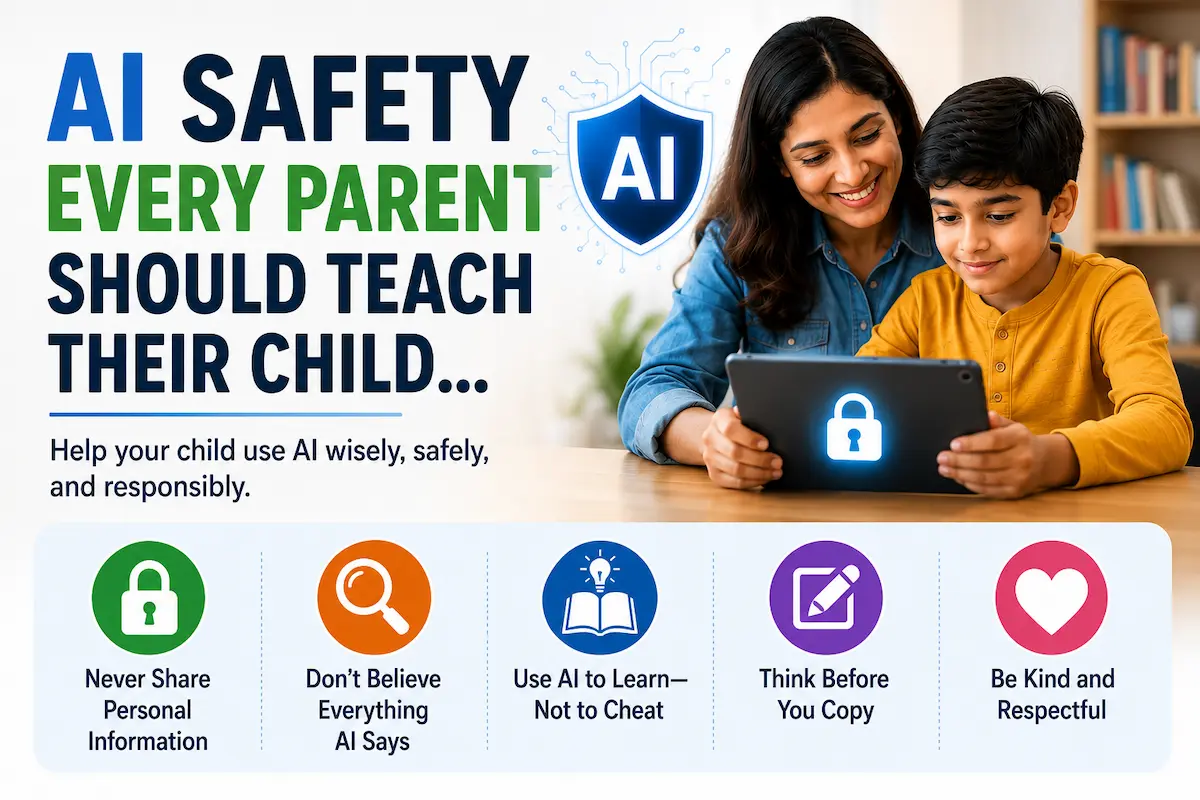
The goal is to teach them to use it wisely.
A child who learns to think, question, create, and solve problems will always have an advantage—even in a world filled with artificial intelligence.
Takeaway for Parents
“Don’t ask whether your child is using AI. Ask whether AI is helping your child learn or simply helping them finish.”
Discussion Question
If your child could complete all homework using AI, would you allow it? Why or why not?
Share your thoughts in the comments and start the conversation with other parents.