

Have you ever wondered whether remembering God only at the end of life is enough? The Bhagavad Gita offers a deeper lesson: our thoughts and habits throughout life shape our state of mind.
Through a conversation between a curious boy and his grandfather, this story explains why true devotion is not just about prayer—it is about how we think, live, and treat others every day.

Atharv’s Visit to the Temple
In a small village lived a curious boy named Atharv, who loved visiting the temple with his grandfather.
One day, he noticed some elderly women holding prayer beads and chanting God’s name. But as he passed them, he heard them complaining about their daughters-in-law.
Atharv wondered why their hands were busy praying while their minds were occupied with complaints.
What Happens When We Remember God at the End of Life?
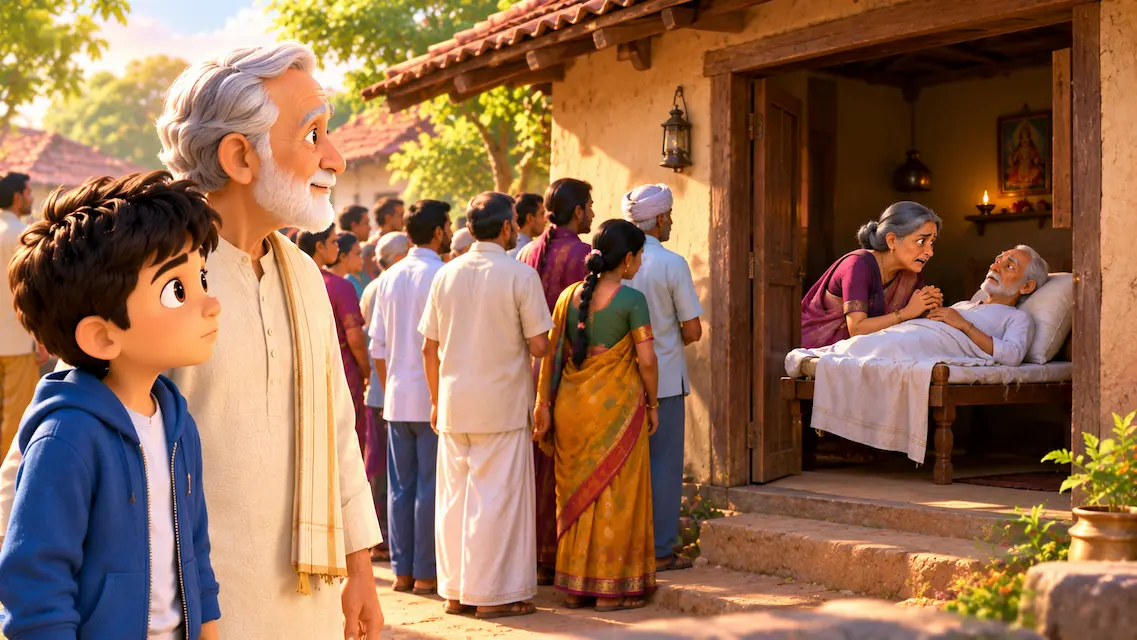
The next day, Atharv and his grandfather saw people gathered outside a house where an elderly man was nearing the end of his life. His wife kept urging him to remember God.
As they walked away, Atharv asked, “Grandfather, if someone spends their whole life doing wrong things but remembers God at the moment of death, will they still attain heaven?”
His grandfather smiled and replied, “Lord Krishna explained this in the Bhagavad Gita.”

The Secret Behind True Devotion
His grandfather gently explained, “Pay attention to the words sadā tad-bhāva-bhāvitaḥ. They remind us that whatever we remain absorbed in throughout life naturally influences our thoughts at the final moment.”
“Remember the women we saw at the temple? They held prayer beads, but their minds were filled with complaints. If someone spends their life thinking about anger, greed, and negativity, will remembering God at the final moment come easily?”
Atharv thought for a moment. “They will probably remember the things they think about every day!”
“Exactly, my child,” his grandfather replied.
He recited Bhagavad Gita, Chapter 8, Verse 6:
भगवद्गीता ८.६
यं यं वापि स्मरन्भावं त्यजत्यन्ते कलेवरम्।
तं तमेवैति कौन्तेय सदा तद्भावभावितः॥
Meaning in English
“Whatever state of being a person remembers when leaving the body, that state they attain, having been absorbed in that state throughout their life.”
Atharv asked, “Does this mean remembering God at the moment of death is enough?”
A Farmer’s Lesson
His grandfather continued, “Someone who remembers God daily, speaks the truth, helps others, and performs good deeds gradually fills their mind with devotion and kindness. Remembering God at the final moment becomes more natural when it has been part of life all along.”
Then he asked, “Imagine a farmer who plants thorny bushes throughout the year but expects sweet mangoes at harvest. Is that possible?”
Atharv laughed. “No, Grandfather! We reap what we sow.”
His grandfather smiled. “That is the lesson. The final moment of life is not something we prepare for only at the end. Our daily thoughts, actions, and habits help shape our state of mind.”


Atharv Understands the True Meaning of Devotion
From that day onward, Atharv understood that devotion was not merely about moving prayer beads with his hands. It was also about keeping his thoughts pure, speaking kindly, helping others, and remembering God every day.
He learned that a life of devotion is built through small, meaningful actions—not just through prayers offered at the last moment.
And whenever Atharv visited the temple, he remembered his grandfather’s words: True devotion begins in the heart and is reflected in the way we live.
🌼 Moral of the Story
-
Remembering God is not just for the final moments of life; it is a way of living.
-
Prayer beads alone are not enough; true devotion must come from the heart.
-
Our daily thoughts, actions, and habits shape our state of mind.
-
Cultivate remembrance of God, kindness, and good deeds throughout life. 🙏


