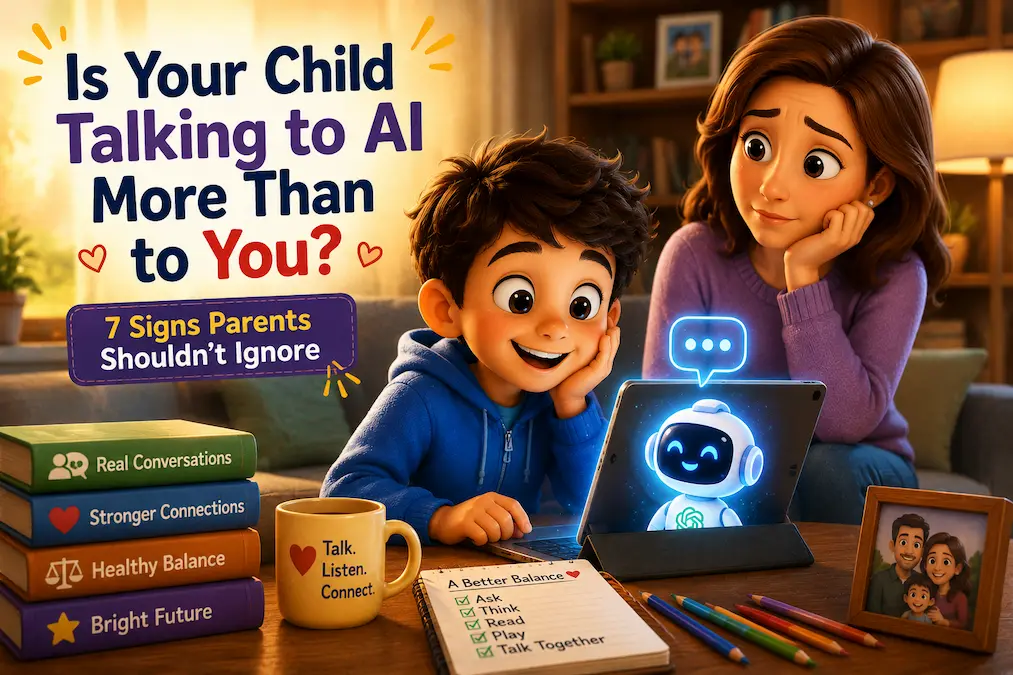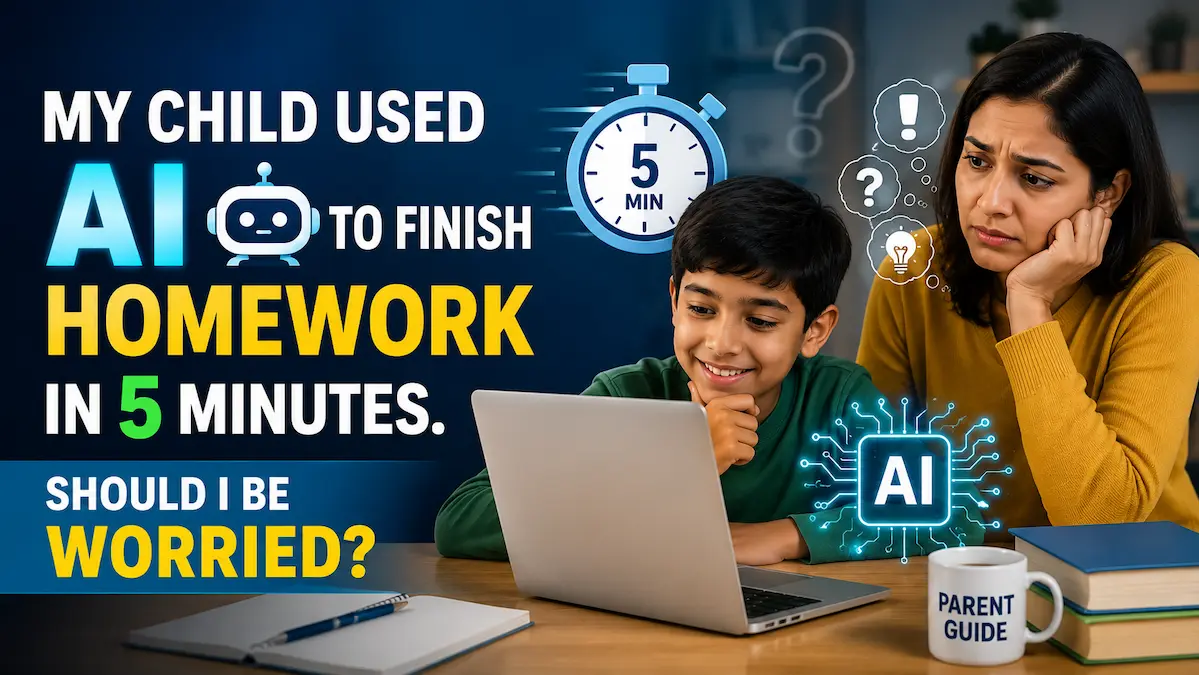
Artificial Intelligence is becoming part of everyday life. Children use AI to complete homework, learn new skills, ask questions, and even create stories and artwork.
While AI offers exciting opportunities, it also comes with responsibilities.
Just as parents teach children to cross the road safely or avoid talking to strangers online, it’s now important to teach them how to use AI wisely.
These simple rules can help children enjoy the benefits of AI while staying safe, honest, and responsible.
Earlier in this series
Rule 1: Never Share Personal Information
Teach children never to enter personal details into AI tools.
This includes:
- Full name
- Home address
- Phone number
- Passwords
- School name
- Photos with personal information
Remember: AI is for learning—not for sharing private details.


Rule 2: Don’t Believe Everything AI Says
AI is smart, but it isn’t always correct.
Encourage children to:
- Check facts
- Use trusted books and websites
- Ask teachers or parents if unsure
Critical thinking is one of the most valuable skills in the AI era.
Rule 3: Use AI to Learn—Not to Cheat
Instead of asking AI to do homework, encourage children to ask for explanations.
❌ “Write my assignment.”
✅ “Help me understand this topic.”
The goal is learning, not shortcuts.


Rule 6: Balance AI with Real Life
Technology is helpful, but children also need time to:
- Read books
- Play outdoors
- Talk with family
- Draw and create
- Exercise
Healthy balance is essential.
A Simple Family AI Safety Checklist
Before using AI, ask:
✅ Am I protecting my personal information?
✅ Am I learning instead of copying?
✅ Did I verify the answer?
✅ Did I use my own ideas?
✅ Would I proudly tell my teacher or parents how I used AI?
If the answer is “Yes” to all five, you’re using AI responsibly.

Final Thoughts
AI is one of the most powerful learning tools children have ever had.
But like any powerful tool, it works best when used wisely.
Parents don’t need to fear AI—they need to guide children in using it safely, honestly, and responsibly.
By teaching these ten simple rules today, you’re helping your child become a confident, ethical, and future-ready learner.
Takeaway for Parents
“Teach your child that AI should make learning easier—not replace curiosity, creativity, or character.”
Which AI safety rule do you think is the most important for children? Is there another rule you would add? Share your thoughts in the comments!