Just a few years ago, students searched Google for answers.
Today, many simply ask AI.
Artificial Intelligence is changing classrooms around the world. Students use it to explain difficult subjects, generate ideas, solve math problems, improve writing, and even prepare for exams.
This has created one of the biggest questions in modern education:
Should schools allow AI in the classroom?
Some educators believe AI can personalize learning and help students succeed.
Others worry it encourages cheating, weakens critical thinking, and reduces creativity.
For parents, the answer isn’t simply “yes” or “no.”
It’s about understanding how AI should be used.

AI Is Already in Schools
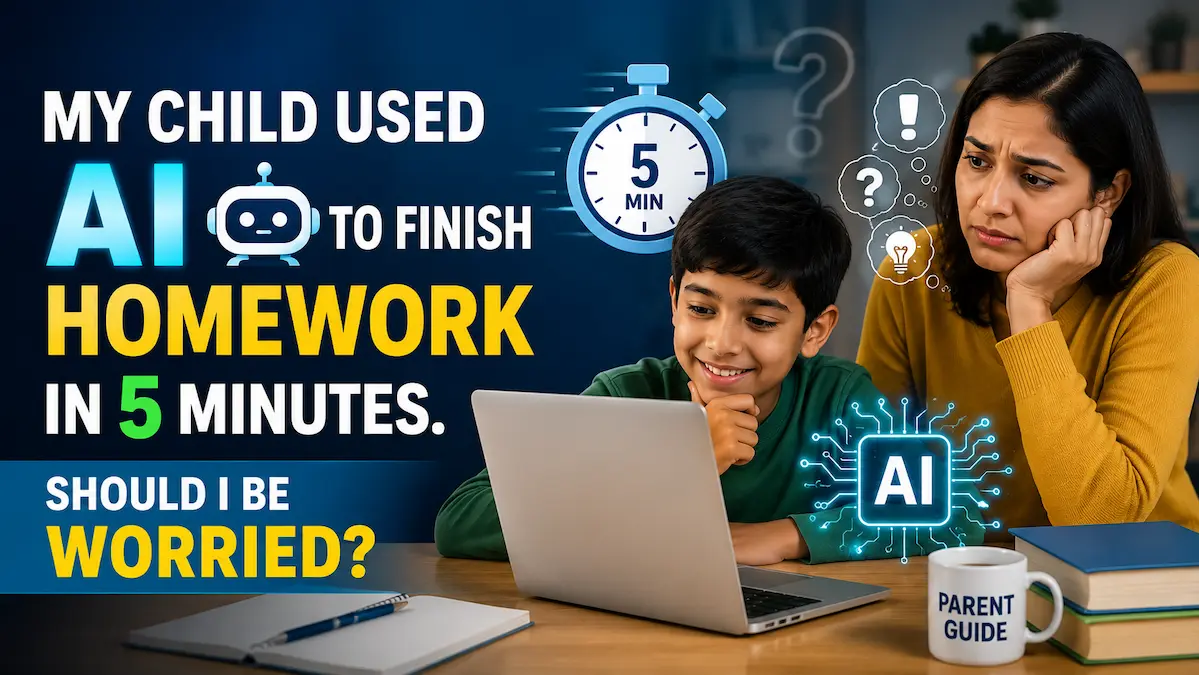
Whether schools officially allow it or not, many students are already using AI.
They use it to:
- Explain difficult concepts
- Practice foreign languages
- Solve math problems step by step
- Brainstorm essay ideas
- Prepare for quizzes
- Improve grammar
- Create presentations
The question has shifted from “Will children use AI?” to “How can schools teach children to use AI responsibly?”
Benefits of Allowing AI in Schools


The Risks Schools Must Address
Cheating : Students may rely on AI to complete assignments instead of doing their own work.
Reduced Critical Thinking : Overusing AI can reduce independent thinking and problem-solving skills.
Incorrect Information : AI can make mistakes, so children should always verify important information.
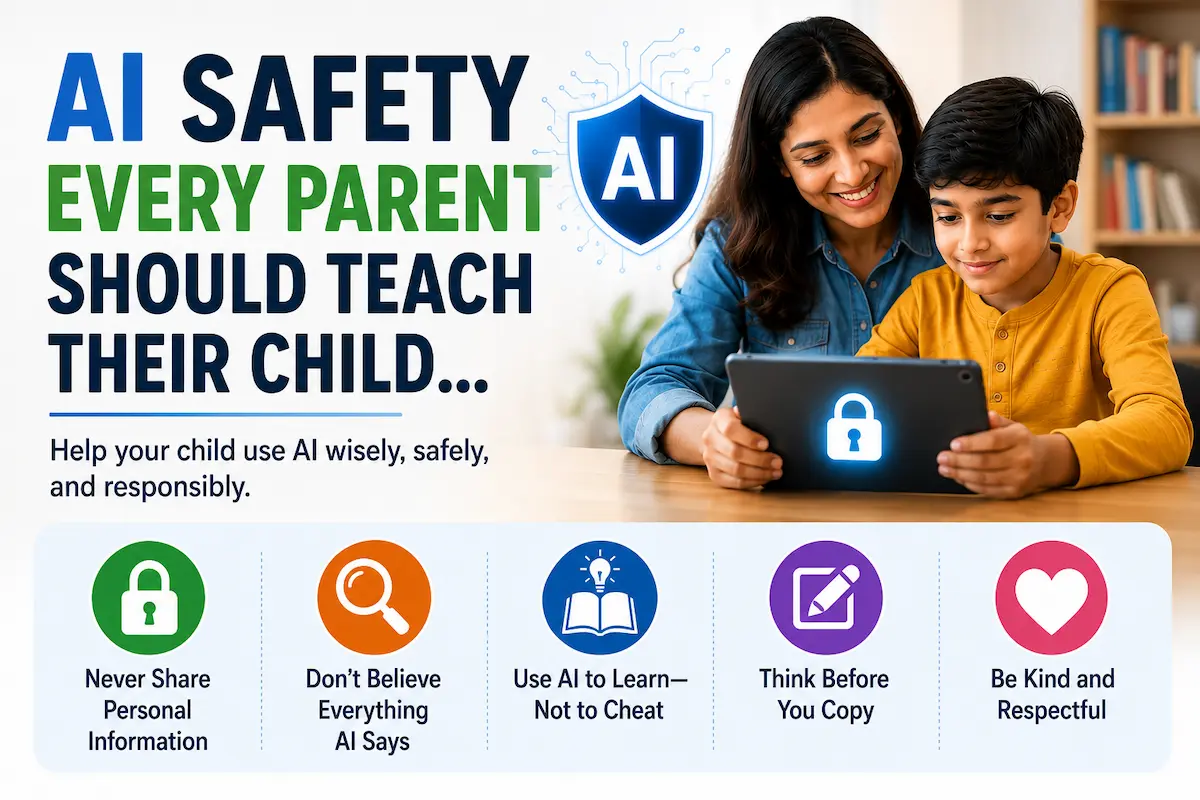
Privacy Concerns : Teach children never to share personal information like passwords, addresses, or school details with AI tools.
What Should Schools Teach Instead?
Instead of banning AI, schools should teach children how to use it wisely.
Don’t ask AI to do the work. Ask it to help you learn.
❌ Write my essay.
✅ Help me organize my ideas.
❌ Solve every math problem.
✅ Explain the steps.
❌ Complete my project.
✅ Give me ideas to improve it.
The goal is simple: Use AI as a learning partner—not a shortcut. Real learning comes from thinking, asking questions, and solving problems yourself.


The Future Classroom
The classroom of tomorrow may look very different.
Students may use AI alongside books, teachers, experiments, and group discussions.
Teachers will spend less time delivering information and more time helping students:
- Think critically
- Solve problems
- Work in teams
- Communicate effectively
- Apply knowledge in real-life situations
These human skills will always matter.
Final Thoughts
Schools shouldn’t ask whether AI belongs in education.
AI is already here.
The better question is:
How can schools, teachers, and parents work together to ensure children use AI to learn—not to avoid learning?
When guided wisely, AI can help children become more curious, confident, and prepared for the future.
The goal is not to replace teachers or parents.
The goal is to empower children with technology while strengthening the skills that make us uniquely human.
🗳️ Poll: What's Your Opinion?
Should schools allow students to use AI for assignments and classroom learning?
☐ Yes – AI should be part of modern education.
☐ Yes, but with teacher supervision and clear rules.
☐ Only for research and learning—not for completing assignments.
☐ No – Students should learn without AI.
💬 Tell us why you chose your answer in the comments below! We’d love to hear your thoughts.